The size, floor plan, bunk beds, dogs, and gas-engine tradeoffs that made this Class A motorhome work for our family road trips.
Family RV Travel National Parks Gas Motorhome
Thor ACEClass ABunkhouse
Quick Facts
Motorhome2018 Thor ACE 30.2
RV TypeClass A gas motorhome
Best ForFamily road trips
Family SetupFour people and two dogs
Key FeatureRear bunk beds
Why It WorkedManageable size and practical layout
When we first decided to get a motorhome, the vision was pretty straightforward. We wanted to load up the family and drive across the country for a few weeks during the summer. State park campgrounds, private campgrounds, national parks – that was the plan. What we needed was a rig that could handle all of those different environments without turning into a headache every time we pulled into a new site.
That meant size mattered from the very start.
This post may contain affiliate links. If you buy through one of these links, The Reading Rambler may earn a small commission at no extra cost to you.
How We Started the Search
Before we ever settled on a specific model, we had to figure out what type of RV made sense for us in the first place. We looked at everything – fifth wheels, travel trailers, Class B vans, Class C motorhomes, and Class A motorhomes. Each one has its own trade-offs, and the more we looked, the more we narrowed in on what we actually wanted out of the experience.
A towable like a fifth wheel or travel trailer meant we needed a capable tow vehicle, which was an additional expense and an entirely different learning curve. Class B vans were appealing for their size and ease of driving, but with a family of four and two dogs, the space just was not there. Class C motorhomes were a strong contender – they tend to be easier to drive than a full Class A and the floor plans can be great for families – but we kept coming back to the Class A layout.
With a Class A, you walk straight in from the cab to the living area, with no step down or awkward transition. The overall feeling is more like a rolling apartment than a bunk-and-bed camper. For the kind of trip we were planning – weeks at a time, multiple states, different types of campgrounds – that sense of connected living space mattered to us.
Once we landed on Class A, the next question was how big.
Keeping It Under 35 Feet
One of the first things we learned when we started researching motorhomes was that size is a real consideration when you plan to visit national parks. We had heard from other RV families and read in several places that national parks tend to work best when your rig is 30 feet or under. Some campsites simply will not accommodate anything larger, and the last thing we wanted was to show up at a park we had been looking forward to and find out we could not get in.
So we set a hard limit early on: nothing over 35 feet, and ideally right around 30.
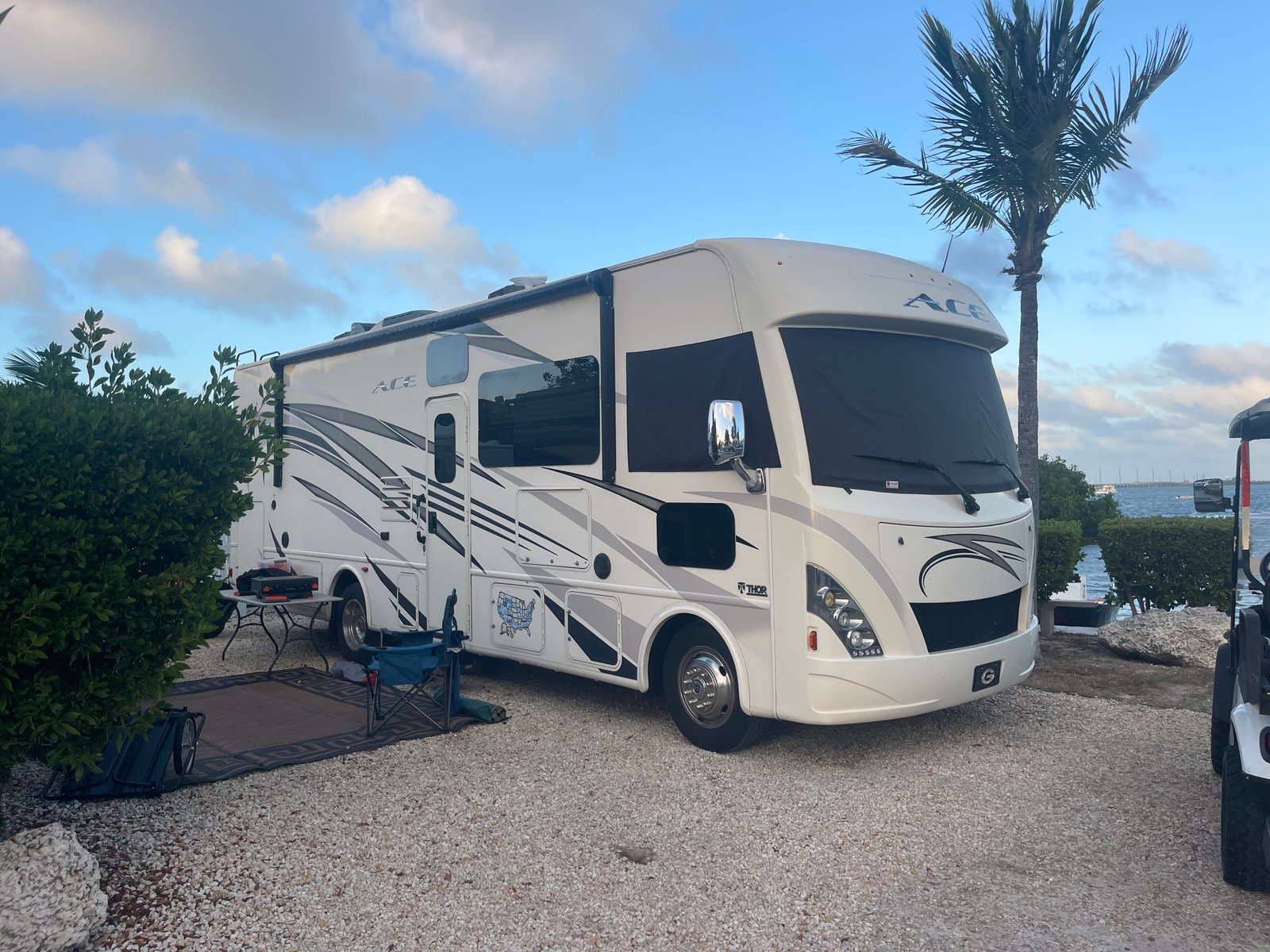
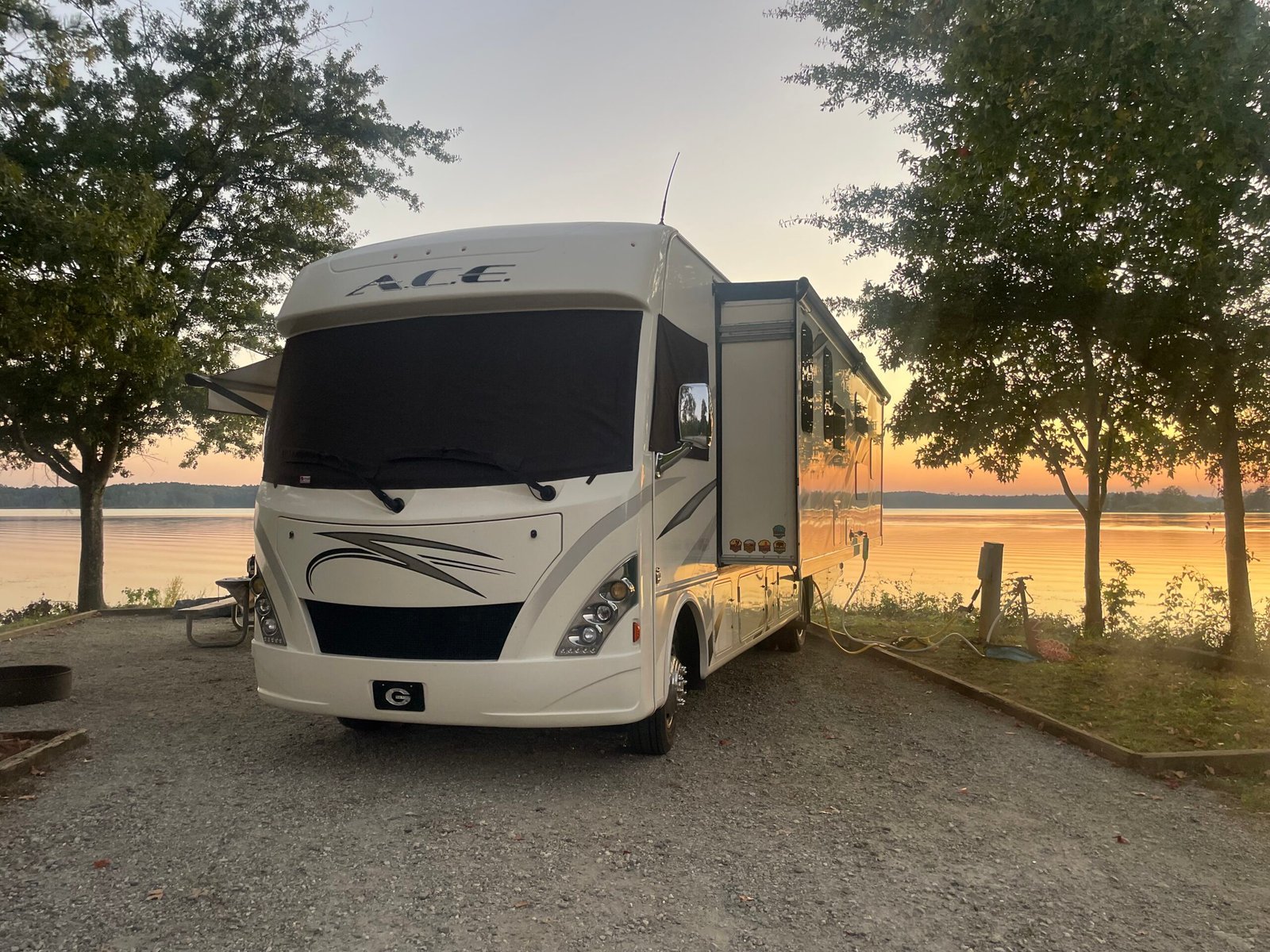
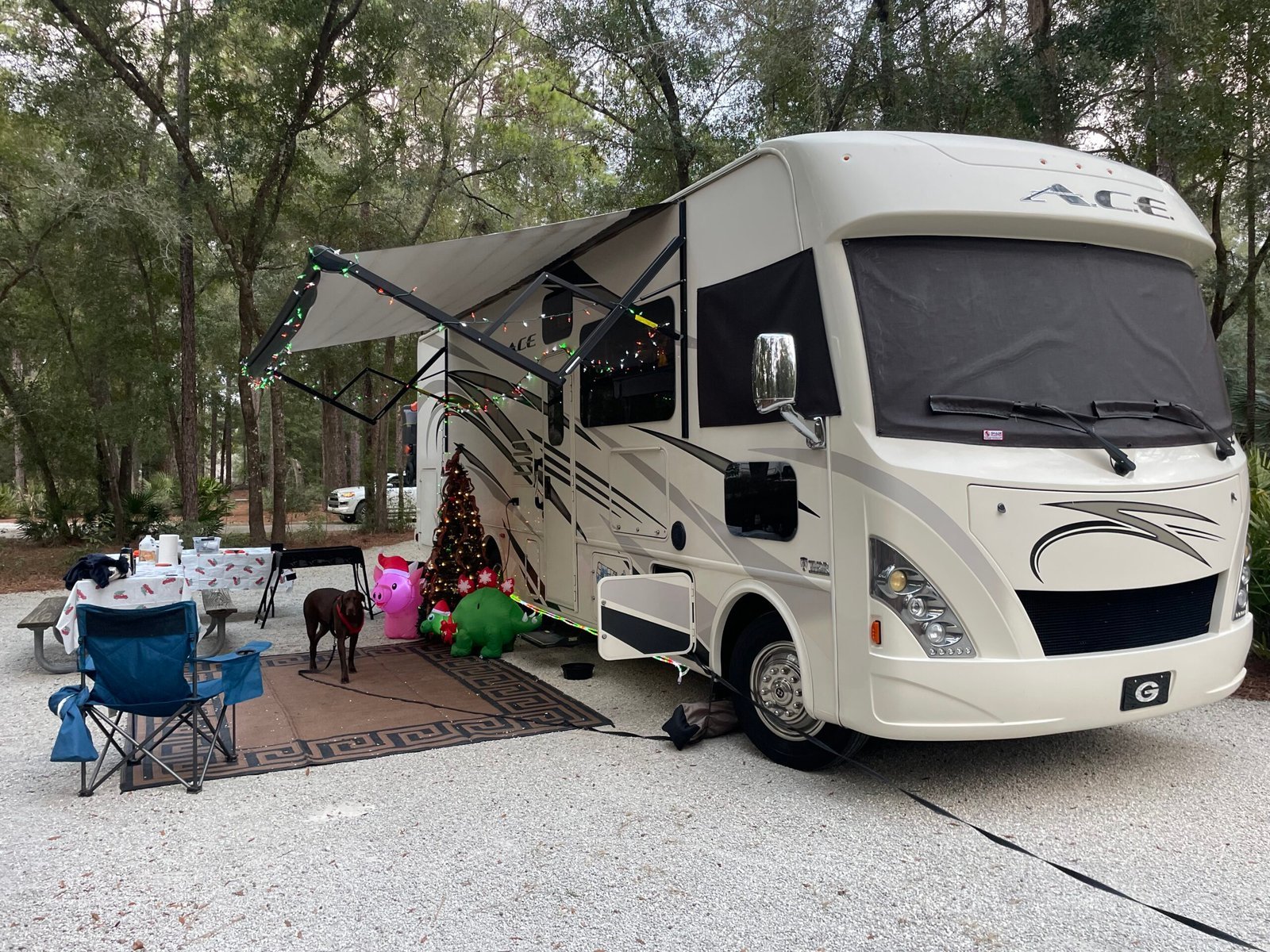
We ended up with the 2018 Thor ACE 30.2, which runs just a hair over 30 feet in actual length. We fudged it a little, but we stayed close enough that we have been able to access the campgrounds we wanted without major issues.
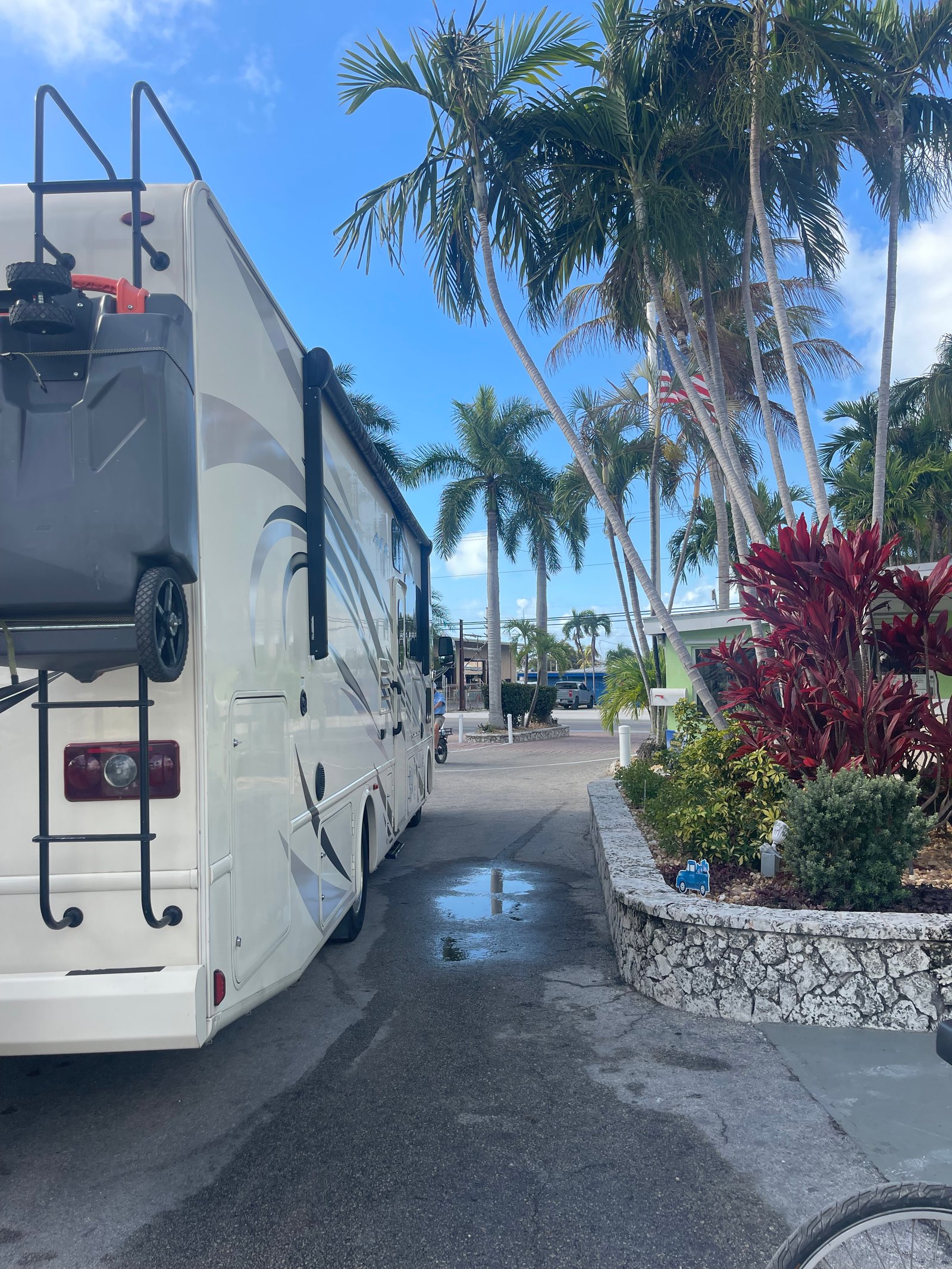
That size matters even more because we do not tow a separate vehicle behind the motorhome. If we need to go somewhere once we are set up, we usually walk or ride bikes. When we do have to drive the motorhome into town, to a trailhead, or to a grocery store, we need it to be small enough that parking is not a complete disaster. The 30.2 gives us a much better chance of fitting into normal-ish parking areas than a larger Class A would, especially on trips where tight streets and limited parking are part of the experience, like our family RV trip to Key West.
“We wanted something big enough to live in for weeks at a time, but small enough that national park and state park campgrounds still felt realistic.”
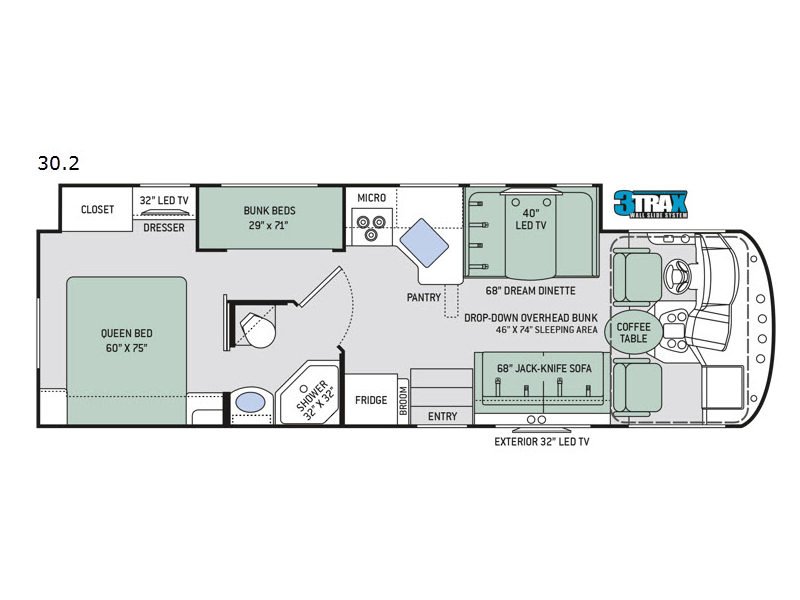
The floor plan is a big part of why we landed on the 30.2 specifically. We are a family of four traveling with two dogs, and the bunk bed setup in the back of the 30.2 was exactly what we were looking for. In practice, our youngest sleeps in the top bunk and claims the bottom bunk for her things, while our oldest migrated up front to the overhead cab bunk above the driver area. It worked out better than we expected – each kid ended up with her own space, and we have our own area at the back.
Is it spacious? It has enough space. We like to think of it as lean and mean. There are certainly rigs with more room, and after a few weeks on the road you do notice the square footage, but the layout is smart and it works for how we travel. The dogs have carved out their spots too, and everyone coexists just fine.
The rest of the interior is well-organized for a motorhome this size. There is a decent kitchen with a three-burner stove and a good amount of cabinet storage, a dinette that doubles as extra sleeping space if needed, a full bathroom, and the cab area up front where the kids sometimes migrate when they are not reading or watching something in the back. The 30.2 also has a slide-out that opens up the main living area considerably. When the slide is out and everyone is settled in, it really does not feel as small as the exterior dimensions suggest.
It also has plenty of storage space for the way our family actually travels. For a family of four, we bring a lot: a grill, inflatable kayaks, a paddleboard, fishing equipment, outdoor chairs and furniture, and the tools we may need in case something comes up on the road. That extra storage has mattered on water-heavy trips, including our Silver Springs State Park camping and kayaking trip. The storage bays give us enough room to bring the things that make a campsite comfortable without having gear piled everywhere inside the coach.
Traveling with Dogs
We have two dogs, and they were a real factor in how we evaluated rigs. Traveling with pets adds a layer of logistics to every trip – where they sleep, where they hang out while we are driving, and how they handle transitions between the motorhome and a campsite.
In the Thor ACE 30.2, the dogs settled into their own routine pretty quickly. While driving, they usually hang out on the sofa or in the sitting area near the main slide. Our GSP will sometimes climb up into the back bunk to look out the window while we are on the road, but most of the time both dogs are stretched out in the slide area. The motorhome does not have a dedicated pet area or anything like that, but the layout gives them enough room to get comfortable without being underfoot constantly.
Most campgrounds – state parks and private campgrounds alike – welcome dogs as long as they are leashed and vaccinations are current. The national parks we have visited have generally been pet-friendly in the campground areas as well, though pets are often restricted from hiking trails and certain park areas, which is worth knowing before you go. For us, having the motorhome as a home base makes traveling with dogs significantly easier than staying in hotels ever was.
Why This Rig Worked
The Decisions That Mattered Most
The right RV for us was less about one perfect spec and more about how the whole thing fit our family.
Manageable Length
We wanted to stay close to 30 feet so state park and national park campground planning would stay realistic.
Real Kid Space
The rear bunks and overhead cab bunk gave the kids their own territory, which matters on longer trips.
Dog-Friendly Layout
The living area gave our dogs enough room to settle in without constantly being underfoot.
Gas Engine Practicality
At the time we bought it, fuel cost, maintenance, and service access all made gas feel like the sensible choice.
Gas Over Diesel
The other big decision we made early on was choosing a gas engine over diesel. At the time we were shopping, gas was noticeably cheaper than diesel, and when you are talking about a vehicle that gets somewhere between 8 and 10 miles per gallon, fuel costs are not a small line item on any road trip.
Beyond the pump price, we also factored in maintenance. Diesel engines require specialized service, and the parts and labor tend to run higher. Since we were new to motorhome ownership and were not entirely sure how often we would use it or where we would be when something needed attention, keeping the mechanical side more straightforward felt like the right call.
The Thor ACE runs on a Ford F-53 chassis with a 6.8-liter V10 engine. It has plenty of power for highway driving, handles grades reasonably well, and the Ford platform means service centers are easy to find on the road. Those were all real practical advantages at the time, especially for a first motorhome.
Honestly, if I had to do it all over again, I would probably look harder at diesel. Diesel has its advantages – better torque on the highway, longer engine life, and fuel costs have shifted around since then. But we made the decision that made sense at the time, and the gas engine has served us well enough. You live and learn.
Starting Your Search
What We Would Tell Another Family
If you are early in the RV search, these are the questions we would sort out before falling in love with a floor plan.
Know Where You Plan to Camp
If national parks and state parks are on your list, research site length restrictions before you commit to a larger rig. Length restrictions are real, and they will affect your trip planning more than you expect. For national park trip planning, Recreation.gov is a useful place to start.
Think About the Floor Plan as Much as the Specs
The number of slide-outs, where the beds are, how the kitchen is arranged, and where everyone goes at night all affect how the trip actually feels.
Factor in the Full Cost of Ownership
Insurance, campground fees, fuel, and routine maintenance add up. Going in with realistic numbers helps keep the first trip from coming with an unpleasant financial surprise.
Pay Attention to How Your Kids Will Use the Space
The bunk beds sold us because they gave the kids their own territory at the back of the coach. That separation – small as it is – makes a meaningful difference on a long trip.
The Right Fit for How We Travel
The 2018 Thor ACE 30.2 hit the right combination of what we needed: a manageable size for national park campgrounds, a floor plan built for a family, and a powertrain that made financial sense when we bought it. It is not a perfect rig – nothing is – but it has taken us to some incredible places, and it fits the way our family travels.
We will keep sharing our trips and experiences on this site as we go. If you have questions about the 30.2 specifically or are in the middle of your own motorhome search, feel free to drop a comment below.